
Charging a car battery: why it’s important and how to do it
A car battery is more than a mere electrical component – it is the beating heart of your vehicle’s electrical system, essential for starting the engine and powering onboard electronics.
Understanding why it’s crucial to keep your battery charged, and knowing how to safely and effectively charge it, can save you from inconvenience, expense and even hazardous situations. Here we explore the significance of maintaining a healthy car battery and provide a comprehensive guide to the charging process.
Why charging a car battery is important
A reliable engine start
The primary function of a car battery is to start the engine. Without adequate charge, the starter motor cannot crank the engine, leaving you stranded.
Powering electrical systems
Modern vehicles are equipped with an array of electrical systems: lights, radio, climate control, power windows and more. A charged battery ensures all these systems can function as intended.
Preventing battery failure and a costly replacement
Allowing your battery to become depleted can cause irreversible damage, shorten its lifespan and increase the risk of sudden failure.
Safety considerations
A weak battery can lead to hazardous situations, such as stalling in traffic or losing power to critical systems at night or in extreme weather.
Avoiding costly repairs
Frequent jump starts or replacement of electrical components resulting from a failing battery can be expensive and time-consuming. Regular charging helps avoid these costs.
Eco-friendly
Proper battery maintenance reduces waste and minimises the environmental impact associated with frequent battery replacements.
Common causes of battery drain
Before delving into the charging process, it’s helpful to understand what can cause a battery to lose charge:
- Leaving lights on: interior or exterior lights left on will drain the battery.
- Short trips: frequent short journeys may not give the alternator enough time to fully recharge the battery.
- Faulty charging system: a malfunctioning alternator or voltage regulator can prevent the battery from charging properly.
- Parasitic draw: electrical devices or wiring faults may cause continual drain even when the car is switched off.
- Temperature extremes: very high or low temperatures can affect battery performance and charge retention.
- Age: batteries can lose their ability to hold a charge as they age.
How to charge a car battery
Charging a car battery is a straightforward process if done with care and attention to safety. Here is a step-by-step guide:
Step 1: Gather your equipment
- Battery charger: choose an appropriate charger for your battery type, which could be lead acid or lithium – CTEK’s CS ONE charger works this out for you.
- Clean cloth and wire brush: for cleaning the battery terminals, if needed.
Step 2: Prepare
- Park the vehicle in a well-ventilated, flat area.
- Turn off the engine.
- Ensure all the car’s electrical accessories are turned off.
Step 3: Inspect the battery
- Check for cracks, leaks or signs of corrosion.
- Clean the terminals if necessary and wipe dry.
Step 4: Do you need to disconnect the battery?
- Consult your vehicle’s manual. If you need to, disconnect the negative terminal first and then the positive. CTEK chargers are designed so they can be used when the battery is still connected to the car.
Step 5: Connect the charger
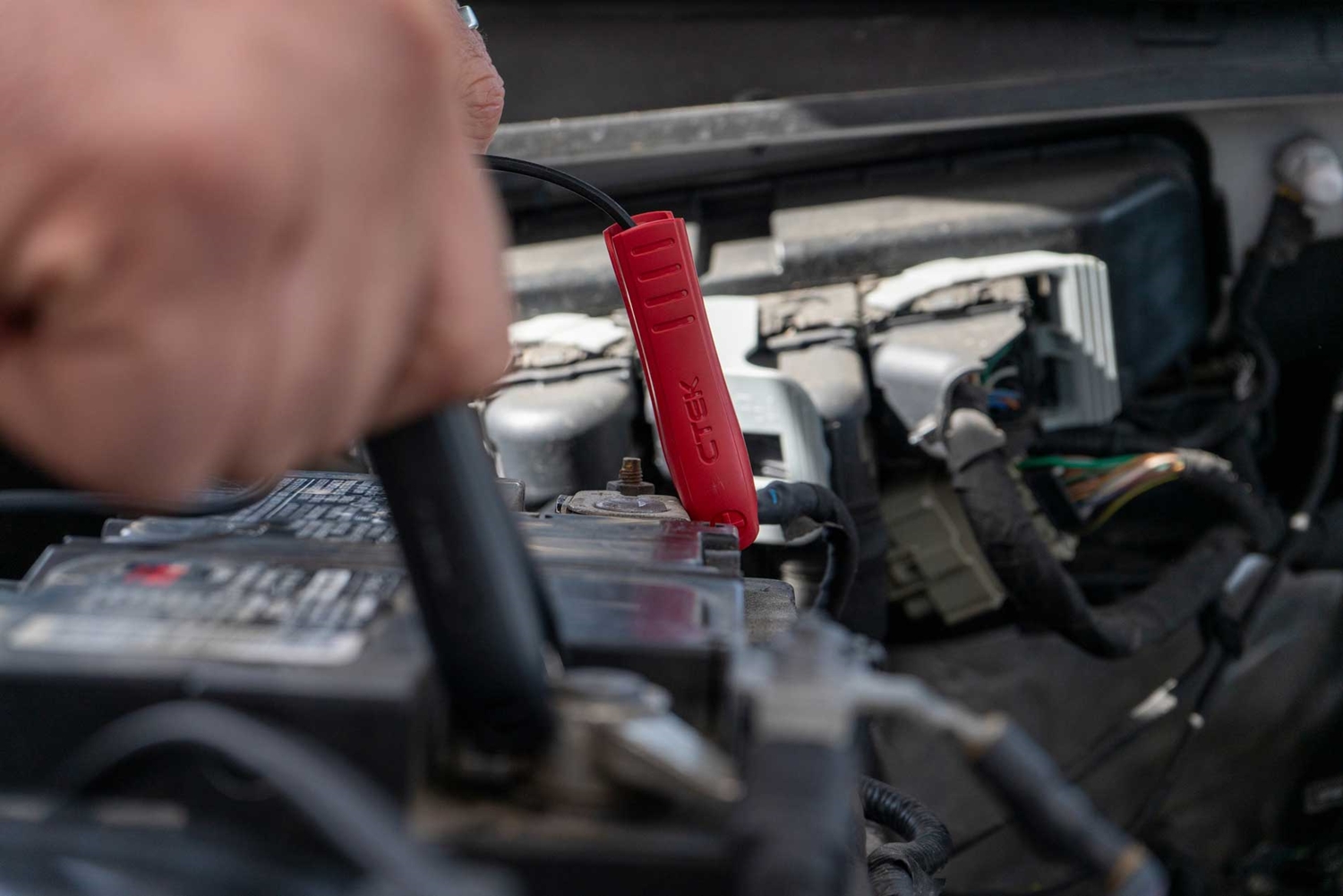
- Connect the red (positive) charger clamp to the battery’s positive terminal (+).
- CTEK recommends you attach the negative clamp to an unpainted metal part of the car chassis away from the battery – this makes sure the car’s battery management system recognises that charging is taking place. If that is not possible, connect the black (negative) charger clamp to the battery’s negative terminal (-).
- Ensure all connections are secure.
Step 6: Plug in and select charging mode
- Plug the charger into a mains power outlet.
- Switch the charger on. If you are using a CTEK charger, it will automatically switch on.
- Select, if you have to, the appropriate charging mode for your battery type. Consult your charger's manual for details.
- The charger may automatically analyse the battery and will begin the charging process.
- Usually, indicator lights will show the charging stage and alert you to any issues.
Step 7: Monitor the charging process
- Check the charger’s indicator lights for progress.
- Charging times vary: a deeply discharged battery may take several hours, while a maintenance/top-up charge may finish in less than an hour.
- CTEK models will automatically switch to maintenance mode when the battery is fully charged, preventing overcharging.
Step 8: Disconnect and Reinstall
- Once charging is complete (as indicated by the charger lights or display):
- Switch off and unplug the charger from the mains.
- Remove the black (negative) clamp first, then the red (positive) clamp.
- Check the battery terminals again to ensure they are clean and tight.
- If the battery was removed, reinstall it, connecting the positive terminal first and then the negative.
Tips for battery maintenance
- Regularly check battery terminals for corrosion and clean as necessary.
- Ensure the battery is securely fastened to prevent vibration damage.
- Drive longer distances occasionally to allow the alternator to fully recharge the battery.
- Turn off electrical systems when the engine is off.
- Regularly connect your battery charger. CTEK chargers will check its health and top up its charge for optimum performance and longevity.
Conclusion
A charged car battery is essential for reliable vehicle operation, safety and a long life for the battery. Understanding the importance of keeping your battery charged – combined with proper charging techniques and maintenance – enables you to avoid the frustration and cost of unexpected battery failure. Whether you are an experienced driver or new to automotive care, mastering the art of battery charging ensures your journeys begin smoothly and your vehicle remains ready for whatever lies ahead.