
How long does it take to recharge a car battery?
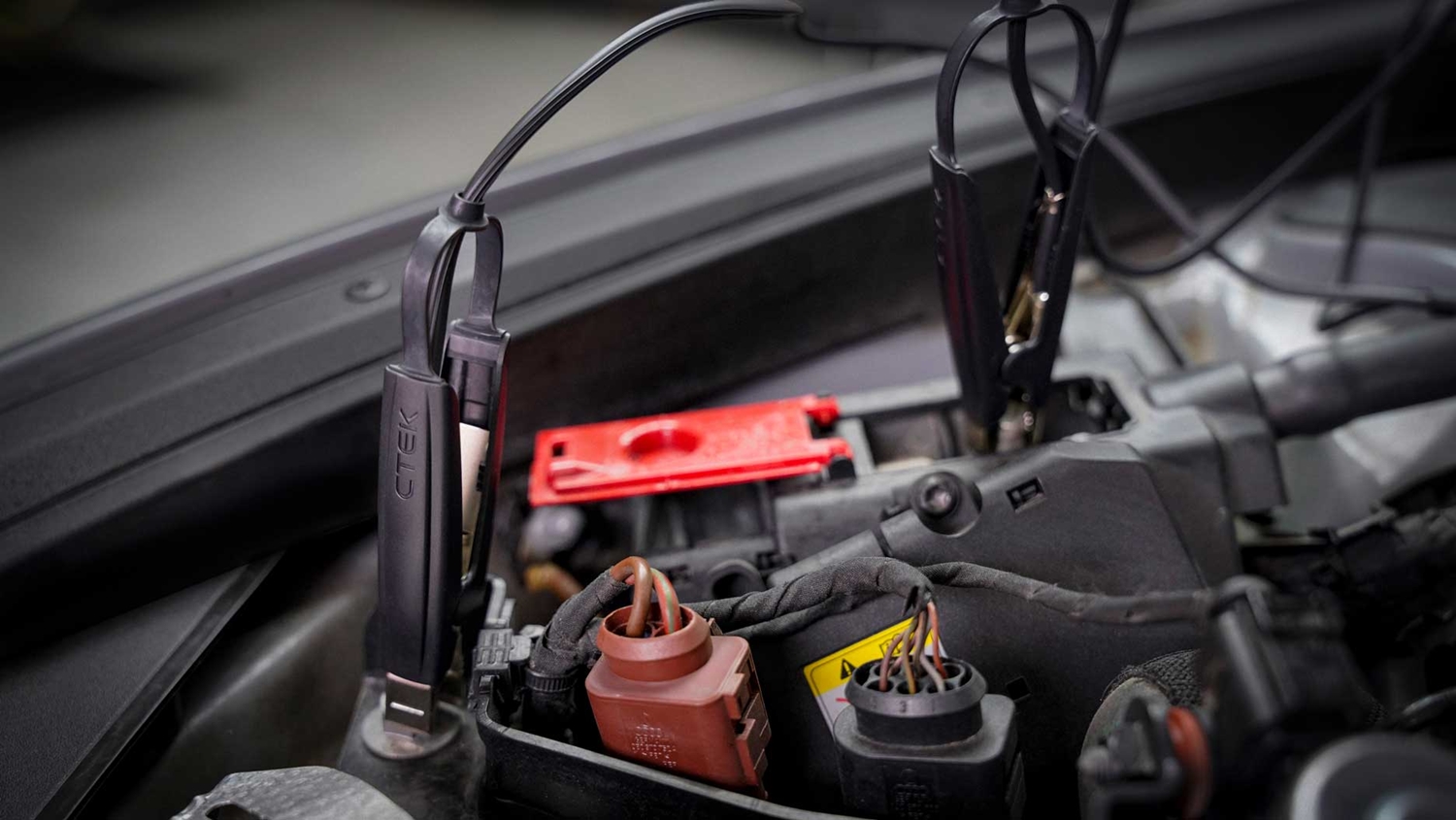
When you connect your charger to your vehicle’s 12V battery, you may wonder how long it will take until your starter battery is fully charged. There is no one answer to that question. Several factors will affect the time taken and understanding them can give you useful clues.
Here are the main factors that will influence the charging time:
State of Charge
The current level of charge in the battery has a big impact. The lower the State of Charge (SoC), the more work the charger has to do in order to bring the 12V battery to a fully charged state. A completely flat battery will take longer to charge up than one that is only partially discharged.
Battery Capacity
The larger the capacity of the battery, the more charge may need replacing. A battery’s capacity is measured in amp-hours – how much current the battery can deliver over a period of time. It’s often shown as Ah. Find out how many Ah your battery can hold and you’ll know its capacity.
Battery Type
Different types of battery technology have different charging requirements and therefore take less or more time to fully recharge. The most common types of car 12V batteries are lead acid and lithium-ion. Knowing your battery type will help you use the correct charger and have a good idea of how long the recharging process might be.
Charger Power
How much current the charger can supply will affect the length of time of the charging cycle. Charger output is measured in amps. A lower power charger can typically have an output of 5A. More powerful chargers can be 20A. The best charger for you depends on your battery capacity and type.
So, there is no single answer to the question: how long does it take to recharge a car battery?
But as a rough guide, a standard 12V car battery of 50Ah capacity would take 25 hours from fully discharged if using a 2A charger, five hours with a 10A charger and 2.5 hours connected to a 20A charger.
Now we understand the factors affecting how long it takes to recharge a battery, let’s look at choosing the best charger for the job.
For smaller batteries
For smaller batteries found in applications such as motorcycles, jet skis, all-terrain vehicles and lawnmowers, a lower current charger such as CTEK’s XS 0.8 is ideal. It’s our smallest 12V charger and delivers 0.8A and can charge batteries with a capacity of 1.1Ah to 32Ah. It can also provide maintenance charging to larger batteries of up to 100Ah. It is ‘connect and forget’, thanks to its fully automatic six step charging process.
For standard batteries
For the 12V batteries in cars, a larger charger output will produce ideal results in terms of both performance and time taken. A 5A output is perfect for all cars and other medium sized vehicles. CTEK’s NXT 5 supports batteries from 1.2Ah to 110Ah (and up to 160Ah for maintenance). It works for lead acid and lithium-ion batteries, and features automatic spark-free operation, reverse polarity protection and is engineered for any environment.
For larger batteries
The batteries of trucks, boats, larger off-road vehicles and performance cars are best served by a higher power battery charger, with an output such as 15A. CTEK’s NXT 15 is such a charger. It can support batteries from 20Ah to 350Ah and is designed to combine the high performance required whilst remaining reliable and easy to use.
The speed of a recharge is good to know, or at least be able to estimate, but having the best charger for the job is more important. CTEK’s newest battery charger, the CS ONE (Gen 2), uses CTEK’s exclusive APTO™ Adaptive Charging technology, which automatically identifies your battery’s chemistry, size, and condition – then delivers a fully optimised charge.
And the CS ONE (Gen 2) works seamlessly with the new CTEK app to provide remote monitoring of each charging session with real time State of Charge (SoC) updates. With the CS ONE (Gen 2) you’ll have a real insight into how long it will take to fully charge your battery.