
Vehicle to Grid EV Charging Succeeds with CTEK
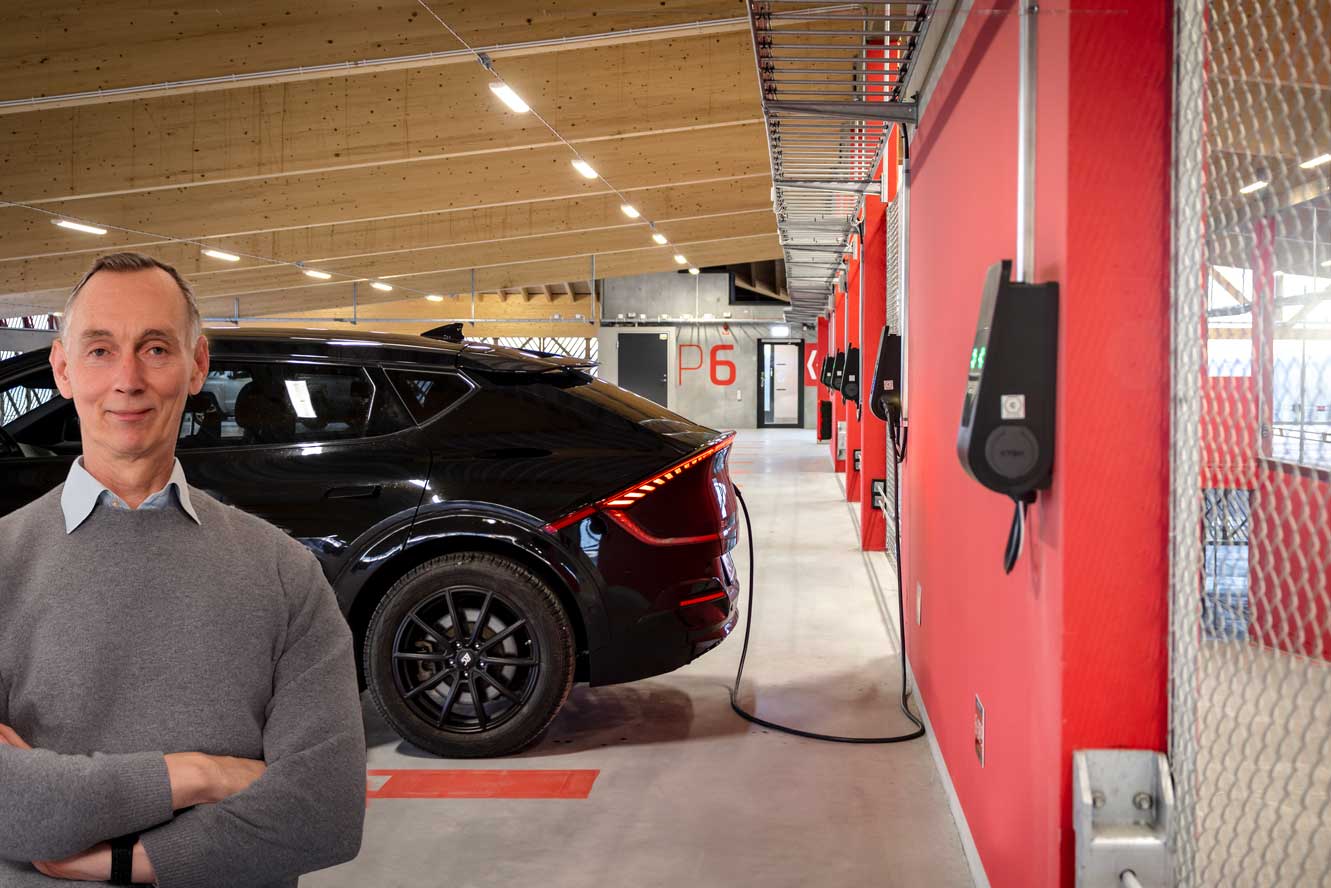
CTEK has played a key role in a groundbreaking Electric Vehicle trial of Vehicle to Grid (V2G) AC bidirectional charging using EVs from Volvo Cars which has shown its CHARGESTORM CONNECTED 3 chargepoint is proven and ready for this exciting future for EVs and the energy grid.
Eleven CC3 chargepoints from CTEK were installed during the project at three locations in Gothenburg as part of the PEPP (Public EV Power Pilots) study into the practical use of V2G technology, driver expectations and the benefits.
Stefan Gabrielsson from CTEK said: “This fascinating research has proven in the field that the CC3 chargepoint will work in a V2G future where the batteries of EVs can be used to help with grid stability and electricity affordability.
“It means we are ready well before when V2G capability will be mandatory in the EU for new public AC chargepoints from 2027, according to the EU directive AFIR.”
The research project began in December 2022 with an initial phase during which V2G software was developed for the EVs and the charging stations. The first V2G charging and discharging took place in April 2025 and the field trial concluded in December. A report on the outcomes is expected to be released in spring 2026.
The three locations – Volvo’s Gothenburg manufacturing plant, its World of Volvo visitor attraction and the Lindholmen Science Park – were all regular work destinations for the Volvo employees who were appointed to take part as drivers.
They drove specially modified test cars – EX40 and C40 models – and series production cars – EX90 - and plugged in when parked at one of the test site car parks equipped with the CC3 chargepoints.
The drivers did not have to initiate or direct V2G activity, that was determined by communications between the CC3, Volvo’s backend and the energy provider. The test cars identified themselves to the CC3s using the Autocharge method.
The study wanted to explore the cost savings available to chargepoint operators (CPOs) from V2G when compared to ‘business as usual’ anytime charging and with smart charging where power consumption is scheduled to minimise the costs.
EV drivers were asked about their expectations of V2G and what would incentivise them opt in to V2G in the future. Opinions varied but messaging that was welcomed included ‘VIP’ reserved parking spaces for V2G participants and V2G parking that was cheaper than the equivalent costs of parking and charging outside the V2G area.
Stefan said: “The user studies produced very interesting findings. It is clear that different incentives appealed to different drivers and future V2G rollout will need to cater for these preferences as well as being reliable and user-friendly.”
The software in the test cars and that in the CC3 chargepoints were both modified for the trial as the existing communication standards (OCPP and ISO 15118) were not at the time ready for AC V2G. An amendment to the latter standard, ISO15118-20, is due in the first quarter of 2026 after which CTEK can update its firmware to make all CC3s actively V2G ready.
Stefan said: “The project has successfully validated AC V2G in public charging scenarios. We are proud to have been part of the team of innovative players in this arena and look forward to continuing to play our part in the evolution of EV charging.”
Maria Backlund, Project Manager at Lindholmen Science Park, said: “The PEPP project has been an exciting project from start to finish. It has been a true collaborative project that no single partner could have carried out independently.
“I’m delighted to see that the project has contributed to CTEK’s development of their charging boxes and associated software. Together we have spurred innovation, driving positive development for both partners and society – a true win-win.”